The door between our garage and house has probably been in place since the house was constructed. However, last year we discovered that the same was not true of the rubber seal between the threshold and the door. It had been glued down to make up for the low clearance between the door and our hardwood flooring and the repeated friction of using the door had taken its toll. So, we removed the seal (it was getting annoying, flapping around every time we use the door and was entirely ineffectual) and proceeded to find a suitable replacement.
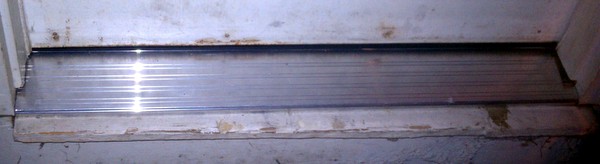
During my investigation into the various types of seal available, from simple door sweeps to threshold/door combinations, I found that part of our problem was the old door threshold. It had become worn and the saddle (the part that has an adjustable height on some types of threshold) was no longer adjustable. As I'm a bit of a DIY novice, I consulted a few Internet searches, a book, my dad while he was visiting and our wonderful neighbour (a local contractor). It seemed that the door was pre-hung including the threshold, so the right thing to do was to replace the whole door. Unfortunately, replacing the door is a pricey undertaking, so I decided to try replacing the threshold. In the worst case that I messed it up, I'd just be back to the original option of replacing the door.
Removing the existing threshold
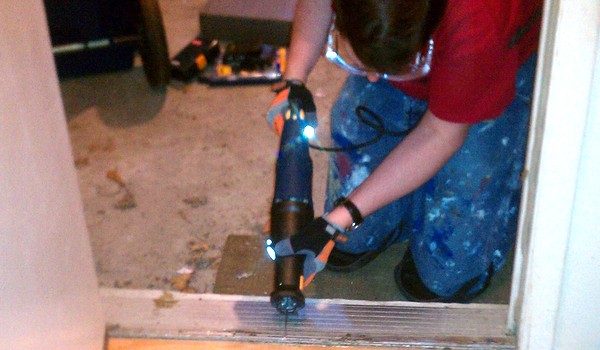
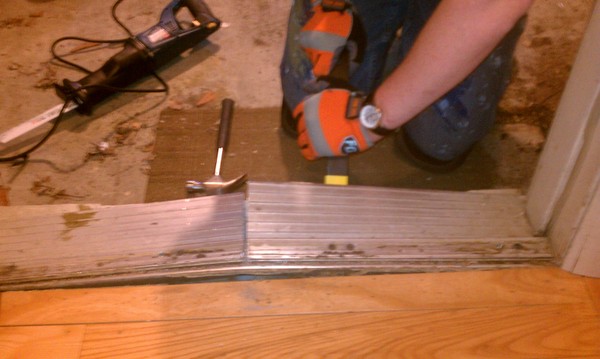
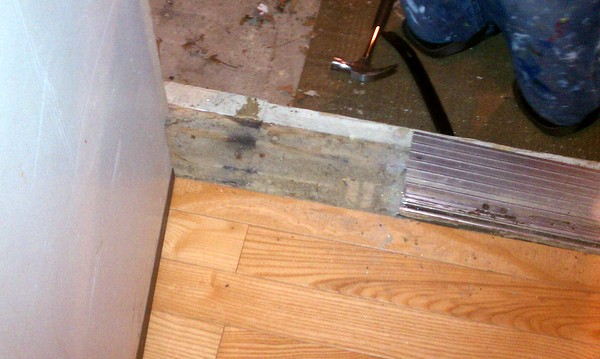
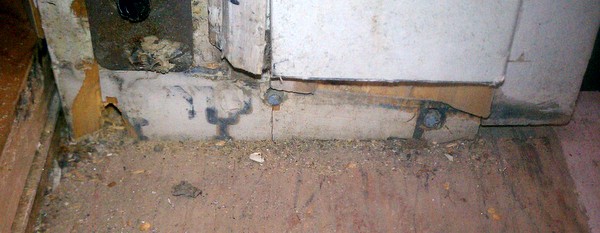
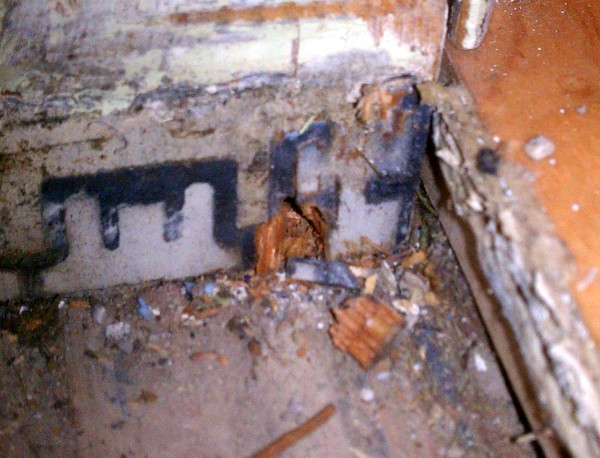
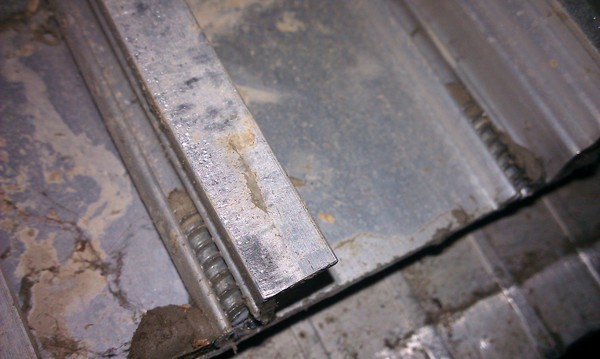
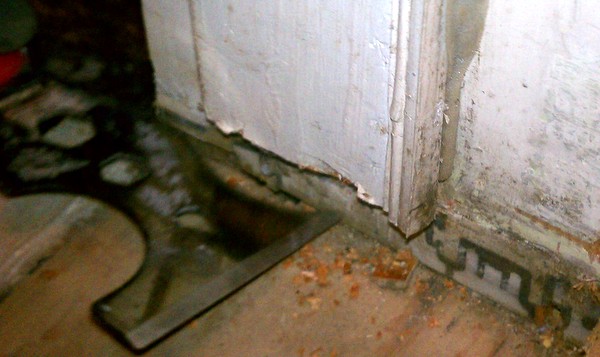
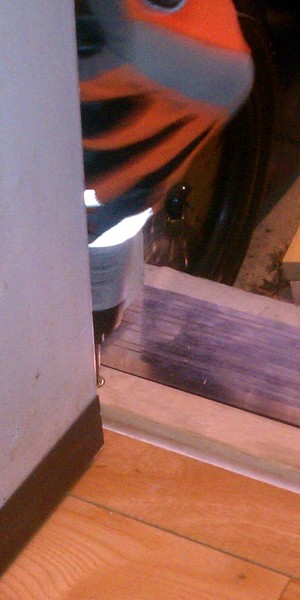
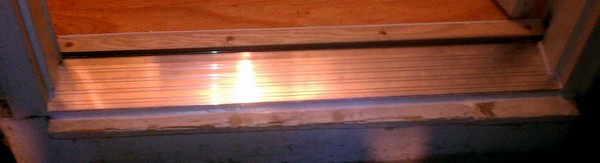
The first thing I had to do was remove the old threshold. To do this, I used a reciprocating saw and cut the threshold down the middle. This was a little more difficult than I had anticipated due to both the uneven structure of the threshold and the hardwood floor in our house, both of which would catch the saw and jar it in my hands. After some trial and error, I was able to slice the threshold almost entirely in half.Cutting out the old thresholdWith the cut finished, I used a pry bar to lift the threshold and take out each half. This took some effort, lifting and pushing the threshold repeatedly to shear the remaining uncut portions. In fact, it took much more effort than I thought it would.Prying out the old thresholdHalfway through removing the old thresholdOnce the whole threshold was out and I had a chance to look, it became clear exactly why it was so difficult to remove. The threshold had been attached to the door frame on each side by three screws and I had sheared two screws on each side and torn the remaining screw out of the frame.The door frame, showing where the screws were torn out or sheared offWhere the old threshold was attached to the door frameThe screws that sheared off or were torn from the door frame when removing the old thresholdI'm not sure that I could have avoided this as the door frame was overhanging the threshold, making it impossible for me to use the reciprocating saw to cut the screws. However, it's probably worth knowing should you try this yourself.
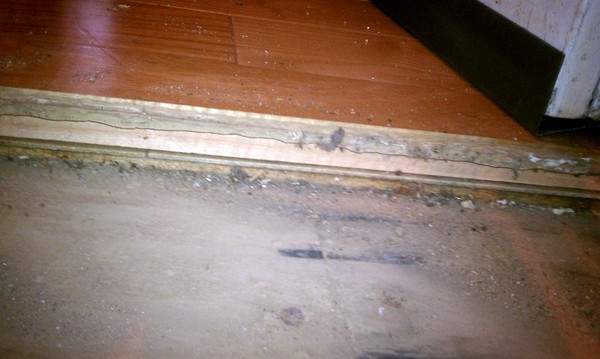
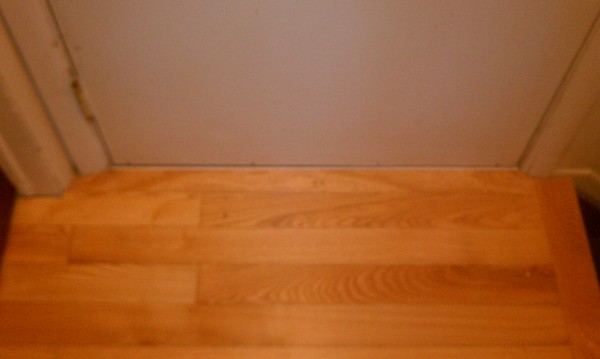
Before doing anything else, I cleaned up the edges that adjoined the threshold and swept up any remaining debris. This included getting rid of the flooring adhesive that had been used to seal the gap between the threshold and the floor.Where the old threshold used to meet the floor
Fitting the new threshold
With the old threshold removed, it was time to prepare the new threshold. I had shopped around and settled on a threshold that was mostly the same as the one I had removed except that it had a wooden saddle rather than a metal one and it was too wide for the door. I measured the width of the door frame (it seemed important) and the new threshold to determine just how much had to be trimmed.
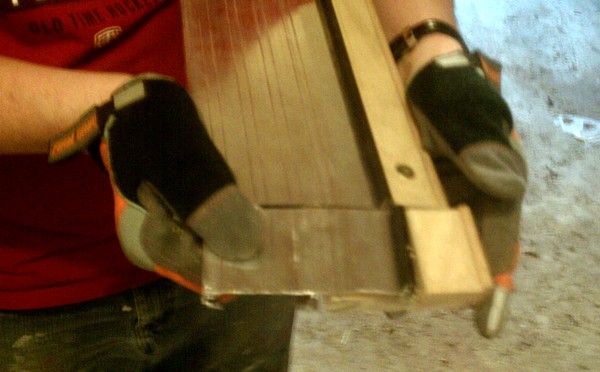
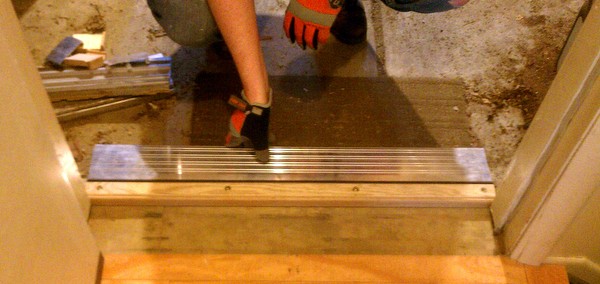
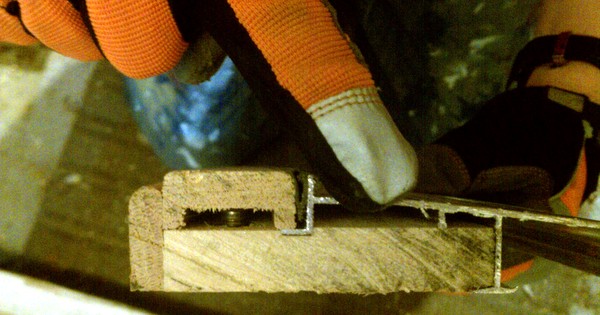
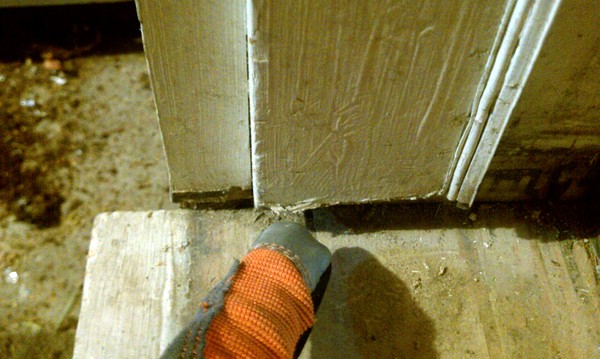
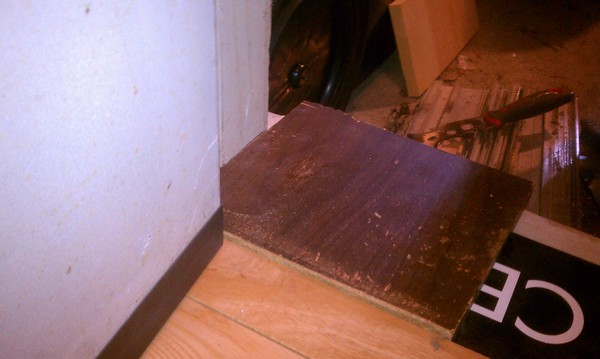
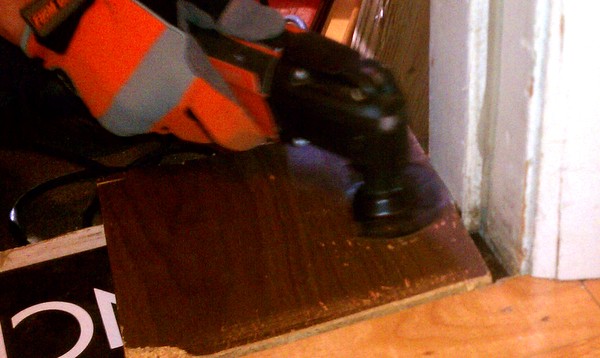
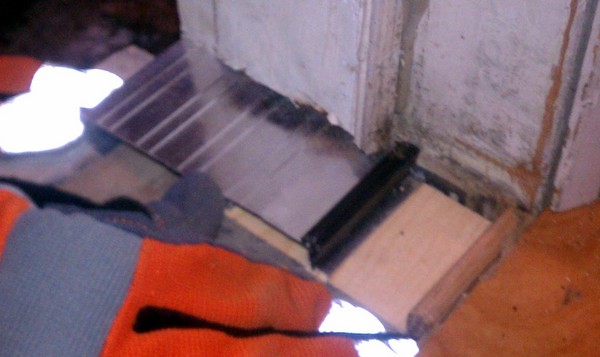
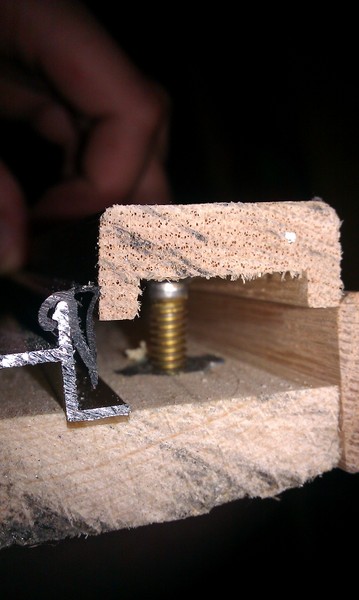
To ensure that the saddle adjustment screws were properly positioned after trimming, I wanted to trim an equal amount from each end of the threshold and to ensure I didn't get the cuts wrong, I measured the two cut points in two ways. First, I measured from each end half the width of what was to be removed and marked it with a pencil, then I added the same amount to the door width and measured that from each end, again marking it with a pencil. Finally, with my trusty hacksaw, I made the cuts as marked.Trimming the new threshold to fitOnce cut to size, I placed the threshold against the door frame to check the fit.Checking the fit of the new thresholdAlthough the width was now correct, it was clear that the threshold was not going to just slip into place. After all, I had to cut the old one in half just to pull it out. In addition, the profile of the new threshold was different to that of the old one, which meant adjusting the door frame to fit.Indicating the new threshold cross-sectionIndicating where the door frame needs adjusting to fit the new thresholdWith several ideas coming to mind that all involved potentially irreversible actions, I was a little stumped on the right way to go so I consulted my awesome neighbour, Tim. He suggested flush-cutting the door frame so that the threshold would slide right in and then screwing the threshold down. He even lent me his flush-cutter to do the job, so after marking the door frame to show where the cut needed to go, I stacked up some things to give a platform for the flush-cutter to rest on. This turned out to be my first practical use of the Borders signs I had obtained when the beloved bookstore folded last year.Setting the height for the flush cutFlush cutting the door frame to fit the new thresholdWith both sides of the frame cut and without the right tools to hand (a chisel would've helped here), I used my multipurpose paint-stripping tool to clean up the cut. It turns out that the part of the frame that needed cutting was thicker than expected so the finish was less than perfect, but it would be hidden once the job was done.Tidying up the flush cutChecking the fit of the threshold in the freshly cut door frameTo finish up this stage before actually getting the threshold into place, I checked the fit against the newly cut frame by using one of the pieces I had trimmed off.
Installation
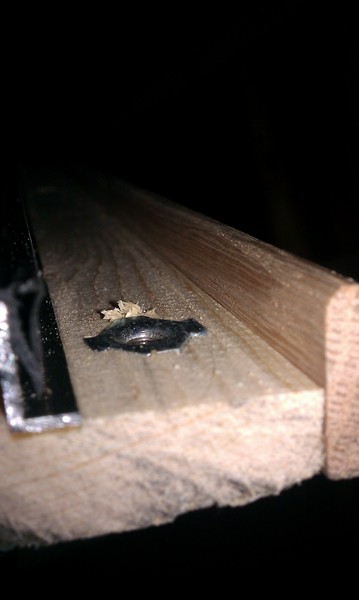
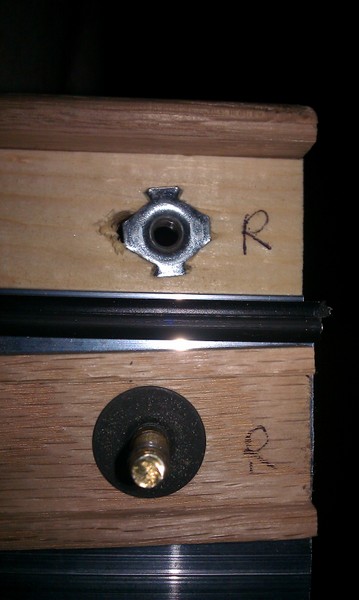
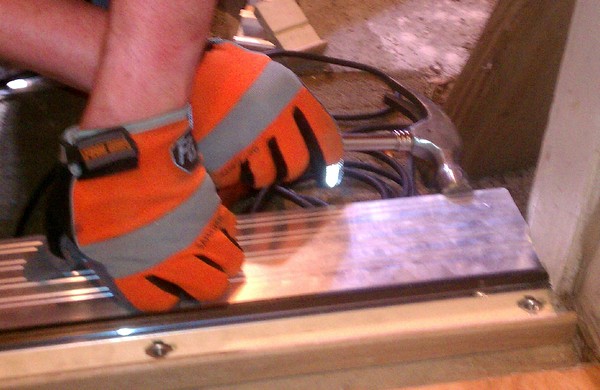
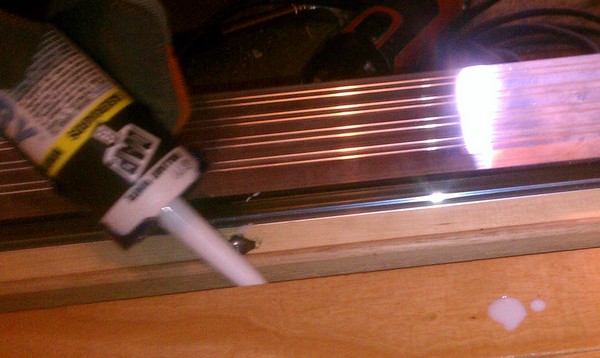
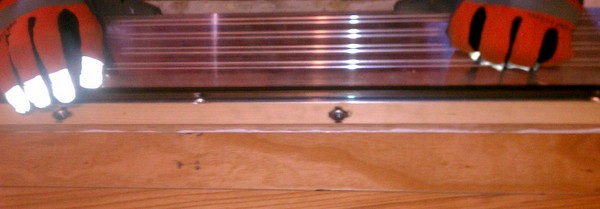
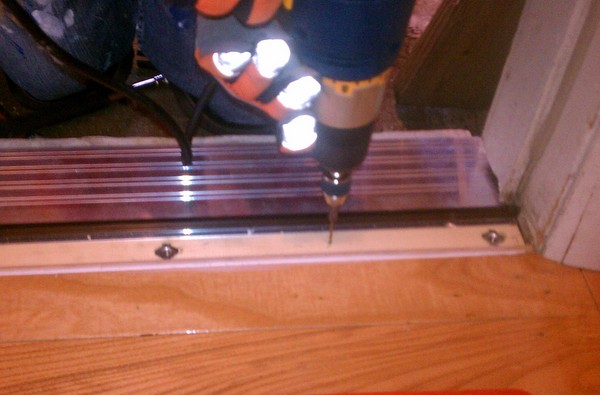
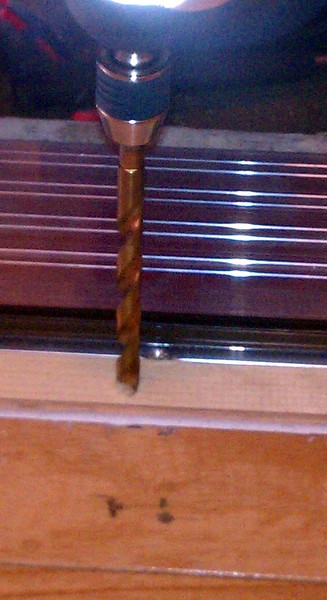
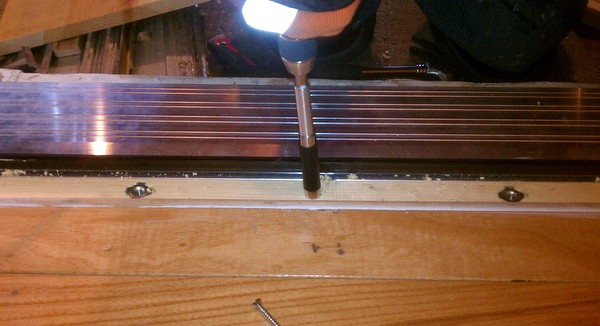
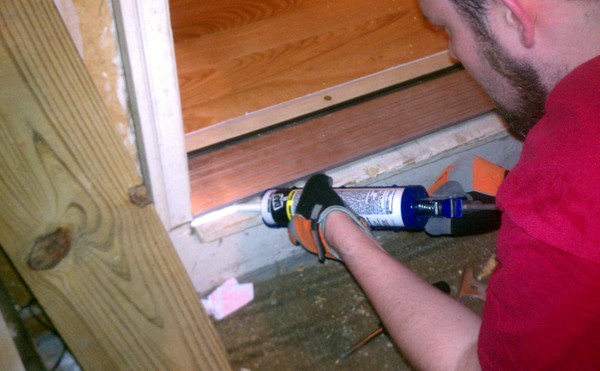
With everything trimmed to size, it was time to install the threshold. On the advice of my neighbour, I removed the saddle so that I would be able to screw the threshold down once it was in place. I also marked the saddle and the threshold to ensure there was no frustrations when putting the saddle back on.Removing the saddle from the new thresholdNew threshold with the saddle removedMarking the saddle and threshold to simplify re-assemblyWith the saddle removed, I tapped the threshold into place.Getting the new threshold into placeI added a bead of caulk to seal the gap between the inside floor and the threshold and pushed the threshold all the way home.Making sure the join between new threshold and floor is sealedPushing the new threshold into placeIt was now time for power tool number three. I drilled three pilot holes for the screws to fix the threshold in place. I also drilled countersinks to ensure the screws would be flush.Drilling pilot holes for the screws that will secure the thresholdDrilling countersink to ensure the screw will be flush against the thresholdDriving the screws to secure the thresholdOnce all three screws were in and holding the threshold in place, I reattached the saddle and adjusted its height to fit against the bottom of the door (this involved a lot of opening and closing the door).Reattaching the saddle and adjusting the heightThe new door threshold in placeChecking that the door closesTo finish everything off, I caulked all of the edges.Caulking the gaps around the new door thresholdNew threshold in place and caulked
Conclusion
I have learned a lot from this, had a lot of fun and saved quite a bit from not having to install a new door. When I started I wasn't entirely convinced it would work out and if I were to do it all again, I certainly might do things a little differently. That said, I am still very happy with the results and more importantly, so is my wife.
Well done! That's something neither I nor my ex would have tackled when we had a house, neither of us being very good at anything more DIY than painting and hanging pictures. Nice use of the old Borders signs.
This is really useful. We've just had a new door fitted on our porch. The silly joiner fit the frame too far in and the aluminium sill doesn't overlap the step so the rain, rather than trickling over and away, comes underneath and is pooling nicely under the door frame. Rot will follow soon unless we do something. We have to take out the sill and replace it with a much bigger one, so I shall be referring to this site again. Just have to find a nice deep sill now and that's proving a bit trying!
Thanks.
My issue was a shed that had had the door threshold rot out from moisture, who knows how many decades ago. While different, your experience gave me some useful tips and stuff to ponder. Thanx for sharing!
So glad I found your page! I think I have the exact same threshold problem and could not think of how to remove it or replace it with the new one I bought. I am going to pretty much follow your illustrations step by step to fix mine. Thanks for posting your work with pictures!!
I bought the threshold at Home Depot. I don't recall the brand, but I just checked out their website and this looks like the right one (both in terms of price and appearance).
So, what would you do different knowing there were screws attaching the jamb to the sill? I'm facing the exact same problem, it's all loose except the ends.
Thanks for your question. I think if I had to do this over, I would cut about a quarter to a half inch from the edges as well as the middle and remove the two sections. This would hopefully leave two small pieces near the jamb and let me see the ends of the screws that secure the threshold to the jamb. I'd then try to snip them off somehow before trying to remove the remaining pieces. I'd probably then just grind or file down whatever remained of the screws so that they were flush with the jamb.
Of course, there are a lot of assumptions in that. Take your time with it, assess your options as you go and do whatever works safely for you.
My problem is an 1-7/8" Stanley steel French door with one stationary side. Trying to locate a replacement door sweep has been useless……only 1-3/4" available. Not sure, but seeing nothing on the bottom of the door makes me think that the worn rubber strip embedded in the length of the threshold might be the old sweep. Any thoughts?
I have to say my experience starts at the beginning of this post and ends where it ends. However, my old threshold was of a similar style, with the rubber strip embedded in the threshold rather than attached to the door, but in my case, that was because the previous owner had taken it off the door and glued it to the threshold. I can only assume they did this because it had come loose. So, after removing the worn one I went looking for a sweep and I too failed to find one that would fit. That's when I decided to replace the threshold (and ensure marital happiness). It is entirely fair to say I had next to no idea what I was doing.
I don't know what to suggest in your specific situation, other than to recommend heading over to http://diy.stackexchange.com/ and posting your predicament there. I hope that helps.
Good luck, Bob. Please stop back and let me know how you resolved it.
I am grateful for your step by step guide for threshold installation. It really is the most specific resource I could find out there on the Internet. Neither the manufacturer (MD, in my case) nor the retailer (Home Depot website) were much help. I just completed my install two days ago; while not perfect, it is certainly serviceable. Some disappointments: I have two large-ish sided gaps on either side of the interior side of the threshold that will need to be filled. The rest of the threshold is so snug I had difficulty sliding it in. It is the same width as the door, though and looks pretty good. I also added caulk to the sill underneath the threshold (not included in your guide.). It is recommended by many other sites I visited, but proved to be a huge mess if the threshold just doesn't slide in like you would like it to on the first go. I would not use caulk UNDER the threshold again. Lastly, may I recommend staining/polyurethaning the white exposed oak if your using one of those adjustable thresholds prior to install. I took the time to do this. It looks great next to its adjacent flooring. Thank you wholeheartly for your guidance.
Great feedback! I actually did caulk the sill underneath the threshold though I neglected to mention it. I agree, it gets messy and I'm not certain it was necessary, especially since I caulked the seams afterward.
I do regret not having stained it first, but only a little.
Jeff, thanks for the excellent pictures to go along with your step by step experience replacing the threshold. Regardless of the type of threshold a reader may have, with the photos and text, one can find a way to replace theirs. I am going to tackle ours today with the impetus from reading your work. Thanks for a great article, it would have taken me the entire 4 hours just taking the photos!
You're very welcome. When I tackled this, I had no idea what I was really doing, so I totally know what it is like to not have helpful resources available.
I have a screen door kit that won't fit against the door frame because with the extended sill, the screen door frame would have to sit on top of it, and the overall exterior door frame height becomes too short. I think I have to remove the sill somthe screen door frame will now fit.
But, the sill is wider than the screen door. So, the question is – how was the experience cutting the sill with the reciprocating saw? Wondering if i could remove just the center part of the sill, leaving the edges, such that the screen door frame can fit in the middle.
If it fails, and the cuts are too messy, I'll have to do the full replace instead anyway (cut pieces from a new sill).
Your post explains exactly what's wrong with my door and what I'd have to do to fix it. And more importantly that I can't or don't want to do it myself. I'll have to use my creativity to come up with a temporary solution until we can afford a new door. It's so wonderful to have people post their experiences to help others. Thank you!
You are very welcome, Joan. I am glad I was able to help. This is exactly why I posted my experience; I had no idea what I was doing and struggled to find good information online. I certainly am no expert, but I can at least share how I muddled through.
This is the only link I have found that its close to my issue although I find that odd.
My oak adjustable saddle on the threshold screws into 4 steel female threaded tabs that are kind of crimped in to the aluminum threshold itself. The initial problem was that the adjustment screw at the point where the in-swing door opens was no longer working, that is not captured (as I discovered after removing the saddle) in the female threaded tab. I found that the second screw had no female threaded tab at all, and so was no adjustable at all, probably causing the next one to fail. The primary issue turned out to be that the the screw in question was not captured in the saddle anymore, so that it no longer raised or lowered the saddle. In that the whole threshold for the 36" door is about 49" because there is also a sidelight I am reluctant to saw off the section under the door.
So my question is: can I get a new oak saddle with the screws properly captured? I can not seem to find such a replacement part. Or is there away to “capture” a properly threaded adjustment screw in the existing saddle. This would also require a way to install a new female threaded tab in the aluminum underneath … one thing at a time.
Or do I just need to go ahead and saw the aluminum threshold off and try to find an appropriate matching one like you did?
Well, firstly, I am no expert; my experience begins at the start of this blog post and finishes at the end.
However, I was unable to locate threshold "parts" to resolve my issue (which fundamentally, sounds like it was the same as the one facing you) and so ended up having to replace the entire threshold. If you are able to locate parts like those you need, then it may be worth trying some of the things you suggest. If you want to pursue the "repair" option over "replace", you might have luck visiting a local Restore or other reuse center to see if they have any thresholds that might match yours.
I am simply trying to remove the "saddle" from an apparently adjustable threshold. Is this even possible?
My nightmare started by initial replacing some french door sweeps with aluminum bottoms to "fix" (cover up) some rotten sections of wood at the bottom and all went fairly well until I tried closing the doors.
The bottoms catch on the wooden center strip of the threshold. At first, I saw screws and figured I could just unscrew the wood thing, pull it out, plane some of it off with a saw and screw the thing back on, but nope.
Instead I stripped all the screws with an impact driver so I then manually had to chisel the wood down just so I could close the doors.
I am loathe to try prying up the entire threshold and replacing it. You are very lucky to have a neighbor like Tim.
Great story and images. Our tale may be like many others, with lessons to be gained. We replaced a lousy aluminum sliding patio door in a 70's tract home with a one-off never-installed attractive french door unit from a local "Green Resource" building recycling center. Our (late)builder was a great finagler, who managed to fit the unit into the sliding door space, despite severe dimension constraints like the loaded beam above and cement below, and a new wood floor which shaved the clearance for the door sweep in-swing. Fifteen years on, and the weather seals have worn – guess what, being some Euro brand, they fit not into channels around the frame, but into the door itself, and are smaller than any seal available here. Typical HDepot options are too large and the door won't close. Also, the lower seal presses against the raised inside face of the aluminum threshold, sealing it when the main handle is raised to lock the door. There is no standard threshold sweep, and actually a shallow channel suggests there might have been some sort of additional threshold we never had. Lessons: False economy, saving initially but now facing unavailable materials which should make ongoing maintenance easy, but instead may force us to find a good domestic maker which actually sells quality seals, etc.; also, atypical dimensions which also may make replacement far costlier, even custom, to get around the first finagles. Look not only at initial quality, but seal quality, availability, and ease of replacement. Besides these issues, the door is still solid, unwarped, and its double glass is sealed and never fogs even in Colorado winters. A HDepot grade Anderson storm door several years newer meanwhile has all the magic disappearing screen track vinyl parts warp, fall off, screws fall out and otherwise disappoint. Is quality dead?
I'm facing the same predicament only with french doors (one side does not open and the factory installed threshold runs the length of both doors). I've come to the conclusion that I will have to cut the threshold where the two doors meet and replace the operable door threshold with a 36" replacement adjustable threshold I bought at Home Depot. Assuming I end up successfully replicating your actions, I will be left with a seam where the old threshold and replacement threshold meet. Any thoughts on that….simply caulk the seam? Won't be the prettiest fix even with a tight/even seam, but beats the heck out of new doors $$$!
Does this method provide a better weather seal than shaping the threshold to fit the contours of the door jamb? I’m Replacing a worn out door (including jamb, trims and threshold) On the side of the house that is bitterly exposed to the elements (scorching AZ sun and Manson rain)
Thanks for sharing these steps to threshold and sill replacement. I have the same problem with my garage door into my home where the threshold had been installed 16 years ago with a threshold that had a rubber strip. I tried replacing the strip and that didn't work so I ended up ripping the rubber off and putting a new door sweep on the that touches the metal as the old one was mostly gone. It seems no air is leaking but the threshold doesn't look great. I've been told that if the door is replaced it must be a fireproof door and the easiest option is a prehung, 20-minute, fire rated door. That costs $2K and I'm not ready for that right at the moment. I have another door where the wood saddle was missing and managed to buy a hardwood threshold cap and cut it to fit the exterior side door as there was a gap under the door. This is the danger from purchasing a 1970s colonial from old people that let the maintenance go since they didn't have a lot of money. Not sure how they even lived here since there was hardly any attic insulation and we froze last winter since we had to have electrical work done in the attic prior to having insulation blown in. I may try my exterior door in the spring or find a carpenter to do it since you've shown that it can be done.
Thank you for the great information and photos Jeff . I have to try this on an exterior garage door (the people door, not the car doors) and you post made me much less nervous to try. The only hitch I'm worried about is the screw that hold the threshold in place – mine have to go into cement. Hopefully is will turn out as well as yours did.




Well done! That's something neither I nor my ex would have tackled when we had a house, neither of us being very good at anything more DIY than painting and hanging pictures. Nice use of the old Borders signs.
Thanks! I was hesitant to get started as I felt daunted, but once I was committed, it was a lot of fun.
Jeff can you come to my house to replace my threshold
I am not available for such things, I'm sorry. This was purely a DIY project and I think it's quite clear that I had no idea what I was doing.
This is really useful. We've just had a new door fitted on our porch. The silly joiner fit the frame too far in and the aluminium sill doesn't overlap the step so the rain, rather than trickling over and away, comes underneath and is pooling nicely under the door frame. Rot will follow soon unless we do something. We have to take out the sill and replace it with a much bigger one, so I shall be referring to this site again. Just have to find a nice deep sill now and that's proving a bit trying!
Thanks.
Great! Hopefully this was useful to you. Jeff
My issue was a shed that had had the door threshold rot out from moisture, who knows how many decades ago. While different, your experience gave me some useful tips and stuff to ponder. Thanx for sharing!
Thanks for the feedback, Charles. I hope you can learn from some of my mistakes. Jeff
So glad I found your page! I think I have the exact same threshold problem and could not think of how to remove it or replace it with the new one I bought. I am going to pretty much follow your illustrations step by step to fix mine. Thanks for posting your work with pictures!!
Glad you have found it useful!
Hi there,
what brand threshold you used and where did you buy it? Could you post the link?
Thank you,
Hi Alex,
I bought the threshold at Home Depot. I don't recall the brand, but I just checked out their website and this looks like the right one (both in terms of price and appearance).
Cheers,
Jeff
So, what would you do different knowing there were screws attaching the jamb to the sill? I'm facing the exact same problem, it's all loose except the ends.
Hi Allen,
Thanks for your question. I think if I had to do this over, I would cut about a quarter to a half inch from the edges as well as the middle and remove the two sections. This would hopefully leave two small pieces near the jamb and let me see the ends of the screws that secure the threshold to the jamb. I'd then try to snip them off somehow before trying to remove the remaining pieces. I'd probably then just grind or file down whatever remained of the screws so that they were flush with the jamb.
Of course, there are a lot of assumptions in that. Take your time with it, assess your options as you go and do whatever works safely for you.
Please post back with details of what you did.
Thanks,
Jeff
My problem is an 1-7/8" Stanley steel French door with one stationary side. Trying to locate a replacement door sweep has been useless……only 1-3/4" available. Not sure, but seeing nothing on the bottom of the door makes me think that the worn rubber strip embedded in the length of the threshold might be the old sweep. Any thoughts?
I have to say my experience starts at the beginning of this post and ends where it ends. However, my old threshold was of a similar style, with the rubber strip embedded in the threshold rather than attached to the door, but in my case, that was because the previous owner had taken it off the door and glued it to the threshold. I can only assume they did this because it had come loose. So, after removing the worn one I went looking for a sweep and I too failed to find one that would fit. That's when I decided to replace the threshold (and ensure marital happiness). It is entirely fair to say I had next to no idea what I was doing.
I don't know what to suggest in your specific situation, other than to recommend heading over to http://diy.stackexchange.com/ and posting your predicament there. I hope that helps.
Good luck, Bob. Please stop back and let me know how you resolved it.
Cheers,
Jeff
how long would you say the project took you?
I think it took about 4 hours, but I took my time and a few breaks. I was flying by the seat of my pants (in case that isn't obvious).
I have to do the same thing, except we got a new door to go with the threshold….this is going to be a beer project thanks for the tips jeff.
No problem, Eric. I hope it all goes well!
I am grateful for your step by step guide for threshold installation. It really is the most specific resource I could find out there on the Internet. Neither the manufacturer (MD, in my case) nor the retailer (Home Depot website) were much help. I just completed my install two days ago; while not perfect, it is certainly serviceable. Some disappointments: I have two large-ish sided gaps on either side of the interior side of the threshold that will need to be filled. The rest of the threshold is so snug I had difficulty sliding it in. It is the same width as the door, though and looks pretty good. I also added caulk to the sill underneath the threshold (not included in your guide.). It is recommended by many other sites I visited, but proved to be a huge mess if the threshold just doesn't slide in like you would like it to on the first go. I would not use caulk UNDER the threshold again. Lastly, may I recommend staining/polyurethaning the white exposed oak if your using one of those adjustable thresholds prior to install. I took the time to do this. It looks great next to its adjacent flooring. Thank you wholeheartly for your guidance.
Great feedback! I actually did caulk the sill underneath the threshold though I neglected to mention it. I agree, it gets messy and I'm not certain it was necessary, especially since I caulked the seams afterward.
I do regret not having stained it first, but only a little.
Thanks for adding your own experience!
I only recently found that I need to do this on a couple of old doors and didn't realize that they made adjustable thresholds.
Great write up, it's just what I need to get started.
Thanks
You're welcome. I'm no professional, but I am glad I was able to help.
Do you sell Thresholds And Bottom Sweeps.
No, but I should, right? 🙂
Jeff, thanks for the excellent pictures to go along with your step by step experience replacing the threshold. Regardless of the type of threshold a reader may have, with the photos and text, one can find a way to replace theirs. I am going to tackle ours today with the impetus from reading your work. Thanks for a great article, it would have taken me the entire 4 hours just taking the photos!
You're very welcome. When I tackled this, I had no idea what I was really doing, so I totally know what it is like to not have helpful resources available.
I have a screen door kit that won't fit against the door frame because with the extended sill, the screen door frame would have to sit on top of it, and the overall exterior door frame height becomes too short. I think I have to remove the sill somthe screen door frame will now fit.
But, the sill is wider than the screen door. So, the question is – how was the experience cutting the sill with the reciprocating saw? Wondering if i could remove just the center part of the sill, leaving the edges, such that the screen door frame can fit in the middle.
If it fails, and the cuts are too messy, I'll have to do the full replace instead anyway (cut pieces from a new sill).
Thx
I have not tried something like that. However, like you said, if it fails, you'd have to do the full replace anyway, so what do you have to lose?
Your post explains exactly what's wrong with my door and what I'd have to do to fix it. And more importantly that I can't or don't want to do it myself. I'll have to use my creativity to come up with a temporary solution until we can afford a new door. It's so wonderful to have people post their experiences to help others. Thank you!
You are very welcome, Joan. I am glad I was able to help. This is exactly why I posted my experience; I had no idea what I was doing and struggled to find good information online. I certainly am no expert, but I can at least share how I muddled through.
Jeff
This is the only link I have found that its close to my issue although I find that odd.
My oak adjustable saddle on the threshold screws into 4 steel female threaded tabs that are kind of crimped in to the aluminum threshold itself. The initial problem was that the adjustment screw at the point where the in-swing door opens was no longer working, that is not captured (as I discovered after removing the saddle) in the female threaded tab. I found that the second screw had no female threaded tab at all, and so was no adjustable at all, probably causing the next one to fail. The primary issue turned out to be that the the screw in question was not captured in the saddle anymore, so that it no longer raised or lowered the saddle. In that the whole threshold for the 36" door is about 49" because there is also a sidelight I am reluctant to saw off the section under the door.
So my question is: can I get a new oak saddle with the screws properly captured? I can not seem to find such a replacement part. Or is there away to “capture” a properly threaded adjustment screw in the existing saddle. This would also require a way to install a new female threaded tab in the aluminum underneath … one thing at a time.
Or do I just need to go ahead and saw the aluminum threshold off and try to find an appropriate matching one like you did?
Well, firstly, I am no expert; my experience begins at the start of this blog post and finishes at the end.
However, I was unable to locate threshold "parts" to resolve my issue (which fundamentally, sounds like it was the same as the one facing you) and so ended up having to replace the entire threshold. If you are able to locate parts like those you need, then it may be worth trying some of the things you suggest. If you want to pursue the "repair" option over "replace", you might have luck visiting a local Restore or other reuse center to see if they have any thresholds that might match yours.
Edit of my own post!
“…not captured … in the female threaded tab.” should read “… not captured … in the oak saddle.
I am in the exact same predicament. The idea I have is to use the new adjustable portion in the existing threshold
That's an interesting idea and certainly a lot simpler than replacing the whole thing. I'd be interested to see how that works out.
I am simply trying to remove the "saddle" from an apparently adjustable threshold. Is this even possible?
My nightmare started by initial replacing some french door sweeps with aluminum bottoms to "fix" (cover up) some rotten sections of wood at the bottom and all went fairly well until I tried closing the doors.
The bottoms catch on the wooden center strip of the threshold. At first, I saw screws and figured I could just unscrew the wood thing, pull it out, plane some of it off with a saw and screw the thing back on, but nope.
Instead I stripped all the screws with an impact driver so I then manually had to chisel the wood down just so I could close the doors.
I am loathe to try prying up the entire threshold and replacing it. You are very lucky to have a neighbor like Tim.
That sounds like you've had a challenge, and yes, having a neighbor like Tim was very fortunate.
Great story and images. Our tale may be like many others, with lessons to be gained. We replaced a lousy aluminum sliding patio door in a 70's tract home with a one-off never-installed attractive french door unit from a local "Green Resource" building recycling center. Our (late)builder was a great finagler, who managed to fit the unit into the sliding door space, despite severe dimension constraints like the loaded beam above and cement below, and a new wood floor which shaved the clearance for the door sweep in-swing. Fifteen years on, and the weather seals have worn – guess what, being some Euro brand, they fit not into channels around the frame, but into the door itself, and are smaller than any seal available here. Typical HDepot options are too large and the door won't close. Also, the lower seal presses against the raised inside face of the aluminum threshold, sealing it when the main handle is raised to lock the door. There is no standard threshold sweep, and actually a shallow channel suggests there might have been some sort of additional threshold we never had. Lessons: False economy, saving initially but now facing unavailable materials which should make ongoing maintenance easy, but instead may force us to find a good domestic maker which actually sells quality seals, etc.; also, atypical dimensions which also may make replacement far costlier, even custom, to get around the first finagles. Look not only at initial quality, but seal quality, availability, and ease of replacement. Besides these issues, the door is still solid, unwarped, and its double glass is sealed and never fogs even in Colorado winters. A HDepot grade Anderson storm door several years newer meanwhile has all the magic disappearing screen track vinyl parts warp, fall off, screws fall out and otherwise disappoint. Is quality dead?
I'm facing the same predicament only with french doors (one side does not open and the factory installed threshold runs the length of both doors). I've come to the conclusion that I will have to cut the threshold where the two doors meet and replace the operable door threshold with a 36" replacement adjustable threshold I bought at Home Depot. Assuming I end up successfully replicating your actions, I will be left with a seam where the old threshold and replacement threshold meet. Any thoughts on that….simply caulk the seam? Won't be the prettiest fix even with a tight/even seam, but beats the heck out of new doors $$$!
Does this method provide a better weather seal than shaping the threshold to fit the contours of the door jamb? I’m Replacing a worn out door (including jamb, trims and threshold) On the side of the house that is bitterly exposed to the elements (scorching AZ sun and Manson rain)
I am sorry, I don't know the answer to that.
Thank you so much! The replacement threshold came with no directions, and your blog so clearly described what I needed to do!
You are most welcome. I'm glad my ridiculous fumblings helped someone else 🙂
Thanks for sharing these steps to threshold and sill replacement. I have the same problem with my garage door into my home where the threshold had been installed 16 years ago with a threshold that had a rubber strip. I tried replacing the strip and that didn't work so I ended up ripping the rubber off and putting a new door sweep on the that touches the metal as the old one was mostly gone. It seems no air is leaking but the threshold doesn't look great. I've been told that if the door is replaced it must be a fireproof door and the easiest option is a prehung, 20-minute, fire rated door. That costs $2K and I'm not ready for that right at the moment. I have another door where the wood saddle was missing and managed to buy a hardwood threshold cap and cut it to fit the exterior side door as there was a gap under the door. This is the danger from purchasing a 1970s colonial from old people that let the maintenance go since they didn't have a lot of money. Not sure how they even lived here since there was hardly any attic insulation and we froze last winter since we had to have electrical work done in the attic prior to having insulation blown in. I may try my exterior door in the spring or find a carpenter to do it since you've shown that it can be done.
Thank you for the great information and photos Jeff . I have to try this on an exterior garage door (the people door, not the car doors) and you post made me much less nervous to try. The only hitch I'm worried about is the screw that hold the threshold in place – mine have to go into cement. Hopefully is will turn out as well as yours did.